
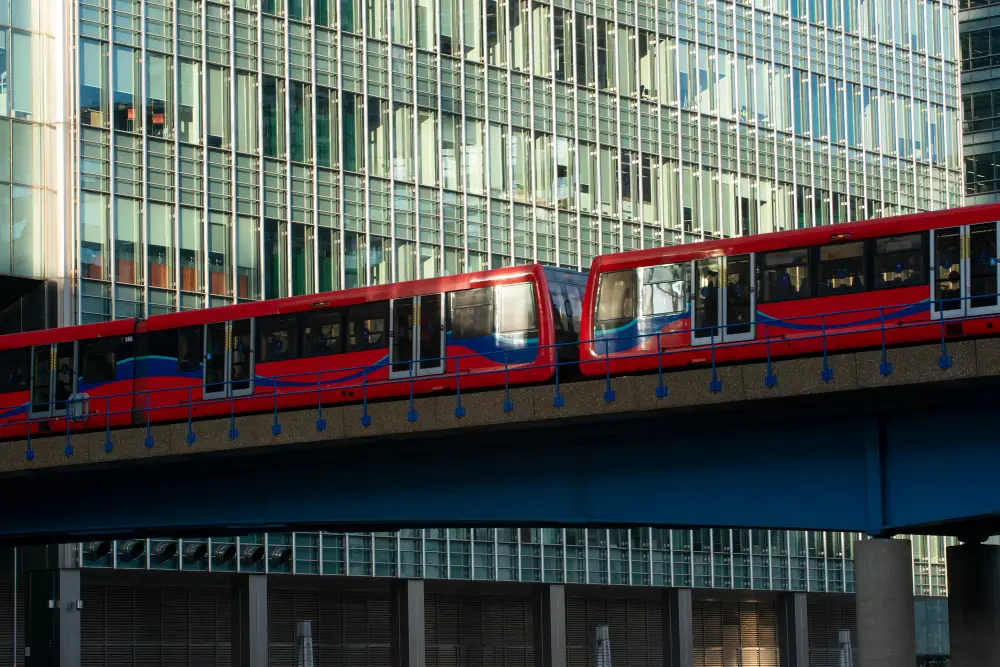
Dubai Metro Red Line Map & Stations List
If you’ve just landed in Dubai, or you’re planning to move here, or you’re an investor trying to figure out which neighbourhoods are accessible and well-connected, the Dubai Metro Red Line map is one of the first things you need to understand. It is the backbone of Dubai’s public transport system, stretching across the city’s most commercially and residentially significant corridors.
In this guide, we’ve broken down everything you need: the complete Dubai Metro Red Line stations list, the route from start to end, Dubai Metro Red Line timings, fare zones, interchange points, and what it all means for people living, renting, or investing in Dubai in 2026. No fluff. Just the facts, laid out clearly.
What Is the Dubai Metro Red Line?
The Dubai Metro Red Line (officially Line 1) is the longest of the two operational metro lines in Dubai. Managed by the Roads and Transport Authority (RTA), it runs roughly east to west across Dubai’s main urban spine, from UAE Exchange in the far west all the way to Rashidiya in the east.
The Red Line was inaugurated on September 9, 2009, and has since been extended twice, with the Route 2020 extension adding six new stations towards Dubai Expo City in 2021, which remain active as a permanent part of the line.
As of 2026, the Red Line covers approximately 52.1 kilometres and serves 34 stations. The line is fully elevated and automated, meaning there are no drivers; the system is completely computer-operated, making it one of the world’s longest driverless metro systems.
For anyone looking to buy or rent property in Dubai,, proximity to the Red Line is a major factor that directly affects property value, rental demand, and daily quality of life.
Dubai Metro Red Line Route: Where Does It Go?
The Red Line runs from the UAE Exchange in the west (near Jebel Ali, Discovery Gardens) through the heart of Dubai, passing Business Bay, Downtown Dubai, DIFC, Karama, BurJuman, and Union, before heading northeast through Deira and ending at Rashidiya near Dubai International Airport.
Along the way, it passes through some of the city’s most sought-after areas for both living and investment. Think about it: one single metro line connects JBR-adjacent areas in the west, Business Bay, DIFC and Downtown in the middle, and the historic Deira and Bur Dubai districts in the east. That’s a lot of ground for a single train route.
The route can be broadly divided into three natural corridors:
- Western Corridor (Expo/Jebel Ali side): UAE Exchange → Ibn Battuta → Discovery Gardens → Al Furjan → Nakheel Harbour
- Central Corridor (Downtown/Business Bay): Mall of the Emirates → Business Bay → Dubai Mall/Burj Khalifa → DIFC → Emirates Towers
- Eastern Corridor (Deira/Airport): Al Karama → BurJuman → Union → Al Rigga → Airport Terminals → Rashidiya
Complete Dubai Metro Red Line Stations List (2026)
Below is the full list of all 34 stations on the Dubai Metro Red Line, along with their zone and key landmarks. Zones matter because they determine your metro fare (more on that shortly).
| # | Station Name | Zone | Notable Connection/Landmark |
|---|---|---|---|
| 1 | UAE Exchange | 2 | Starting point, Jebel Ali Industrial Area |
| 2 | Danube | 2 | Residential West Dubai |
| 3 | Ibn Battuta | 2 | Ibn Battuta Mall |
| 4 | Energy Metro | 2 | DEWA, Nakheel HQ area |
| 5 | Al Furjan | 2 | Al Furjan Residential |
| 6 | Discovery Gardens | 2 | Discovery Gardens community |
| 7 | Al Quoz | 1 | Al Quoz Industrial |
| 8 | Nakheel Metro Station | 1 | Nakheel Harbour & Tower area |
| 9 | Mall of the Emirates | 1 | Mall of the Emirates, Al Barsha |
| 10 | Al Barsha | 1 | Al Barsha community |
| 11 | Sharaf DG | 1 | Al Barsha South |
| 12 | Mashreq Metro Station | 1 | Mashreq area |
| 13 | Business Bay | 1 | Business Bay towers |
| 14 | Dubai Mall / Burj Khalifa | 1 | Dubai Mall, Burj Khalifa, Fountain |
| 15 | Financial Centre | 1 | DIFC, Gate Village |
| 16 | Emirates Towers | 1 | Emirates Towers Hotel & Offices |
| 17 | World Trade Centre | 1 | DWTC, Zabeel Park |
| 18 | Al Jafiliya | 1 | Jumeirah, Oud Metha Road |
| 19 | Al Karama | 1 | Karama souk & residences |
| 20 | Max | 1 | Max Mall, ADCB |
| 21 | BurJuman | 1 | Transfer to the Green Line, Bur Dubai |
| 22 | Shahdadabad / Al Fahidi | 1 | Al Fahidi Historical Neighbourhood |
| 23 | Union | 1 | Transfer to the Green Line, Deira |
| 24 | BaniYas Square | 1 | Deira souks |
| 25 | Abu Bakr Al Siddique | 1 | Abu Bakr Al Siddique Road |
| 26 | Al Rigga | 1 | Al Rigga residences, Deira |
| 27 | Union (Deira City Centre) | 1 | Deira City Centre Mall |
| 28 | GGICO | 1 | Al Garhoud residential |
| 29 | Airport Terminal 1 | 1 | DXB Terminal 1 |
| 30 | Airport Terminal 3 | 2 | DXB Terminal 3, Concourse B & C |
| 31 | Emirates | 2 | Garhoud, Emirates Airline HQ |
| 32 | Al Jaddaf | 2 | Healthcare City, culture village |
| 33 | Creek | 2 | Dubai Creek Harbour area |
| 34 | Rashidiya | 2 | Eastern terminus, Mirdif nearby |
*Note: The station previously known as ‘Jebel Ali’ was rebranded, and the Route 2020 extension now covers that western corridor up to UAE Exchange. Station names are as per the official RTA naming convention in 2026.
Key Red Line Stations Worth Knowing
Not every station is equal in terms of what’s nearby. Here are the ones that matter most for residents, commuters, and real estate investors:
Mall of the Emirates Metro Station
One of the most used stations on the entire network, Mall of the Emirates metro station connects riders directly to Mall of the Emirates, one of the largest malls in the world, home to Ski Dubai, and surrounded by Al Barsha’s residential and commercial clusters. It’s a high-footfall hub with excellent property fundamentals nearby.
Dubai Mall / Burj Khalifa Station
This is arguably the most iconic station on the line. It connects to the Dubai Mall via a climate-controlled pedestrian bridge and sits in the heart of Downtown Dubai. Real estate around this station consistently commands premium prices and strong rental demand.
BurJuman Station
This is the first of the two Red Line – Green Line interchange stations, making it a critical transfer point for commuters crossing between Bur Dubai and Deira. The BurJuman Mall and the surrounding Bur Dubai souk areas are a short walk away.
Union Station
The second interchange station between the Red and Green Lines, Union, sits at the border of Deira and the creek area. It’s one of the network’s busiest stations and a strategic access point for Old Dubai’s commercial districts.
Abu Bakr Al Siddique Metro Station
Located in Deira, Abu Bakr Al Siddique metro station serves the Abu Bakr Al Siddique Road corridor, a busy commercial and residential belt in Deira. It’s well-used by residents living in Deira’s mid-range apartment communities and is close to several supermarkets, clinics, and local retail.
Al Rigga Metro Station
Situated in old Deira, Al Rigga metro station is surrounded by budget and mid-market hotels, residential buildings, and retail strips. It serves as a gateway to one of Dubai’s most ethnically diverse and affordable communities.
Nakheel Metro Station
This station sits near the Nakheel Harbour and Tower development site in the Al Quoz / Sheikh Zayed Road zone. The area around Nakheel metro station is undergoing significant development, which makes it interesting from a capital appreciation standpoint.
Al Khail Metro Station
Not to be confused with the Al Khail Road corridor, but the station area connects well to Business Bay’s inner residential grid and is relevant for those looking at mid-community apartment blocks.
DIP (Dubai Investment Park) and Expo Corridor
The Route 2020 extension stations, including those serving the Expo City corridor and Dubai Investment Park (DIP) areas, are increasingly important as residential communities like Emaar South and Greenville grow. The DIP metro station area has seen a surge of affordable to mid-range residential investment interest since 2022.
Jebel Ali Area (UAE Exchange End)
The far western end of the Red Line, including the UAE Exchange terminus and stations toward Jebel Ali, connects Dubai’s industrial and port zones with the rest of the city. Many blue-collar and mid-income workers rely on this section of the line for their daily commute from Discovery Gardens and Al Furjan.
Red Line and Green Line: Where Do They Connect?
The Dubai Metro has two lines: the Red Line and the Dubai Metro Green Line. These two lines intersect at exactly two stations, both of which function as free-transfer interchange points. You do not need to pay an extra fare to switch between lines at these stations.
| Red Line Station | Green Line Station | Area |
|---|---|---|
| BurJuman | BurJuman | Bur Dubai |
| Union | Union | Deira |
The Green Line runs from Etisalat station in the south to Creek station in the north, passing through Al Qusais, Al Nahda, Airport Terminal 2, and Al Ghubaiba. Understanding both lines together gives you the full picture of the latest Dubai metro route coverage across the city.
Dubai Metro Red Line Timings (2026)
The metro timings in Dubai follow a weekly schedule that changes on weekends. Here are the official Dubai Metro Red Line timings as updated for 2026:
| Day | First Train | Last Train |
|---|---|---|
| Saturday – Wednesday | 5:00 AM | 12:00 Midnight |
| Thursday | 5:00 AM | 1:00 AM (next day) |
| Friday | 10:00 AM | 1:00 AM (next day) |
*Important: On public holidays and special events (New Year’s Eve, UAE National Day, etc.), the RTA often extends metro operating hours. These changes are announced in advance via the RTA website and social channels. Always check the RTA app before planning late-night travel on event days.
The frequency of trains is approximately every 3 to 7 minutes during peak hours and 7 to 10 minutes during off-peak hours. Peak times are generally 7:30 AM to 9:00 AM and 5:30 PM to 8:00 PM on weekdays.
Dubai Metro Red Line Fare: How Much Does It Cost?
Metro fares in Dubai are calculated based on the number of zones you travel through. You need a Nol Card to ride the metro; cash or contactless payments are not accepted at the gates. Nol Cards are available at all metro stations and many outlets across the city.
The network is divided into two main zones for pricing purposes:
- Zone 1: Downtown Dubai, DIFC, BurJuman, Karama, Deira, Airport terminals, the core urban spine
- Zone 2: UAE Exchange, Discovery Gardens, Al Furjan, Rashidiya, and the outer ends of the line
| Journey Type | Silver Class | Gold Class |
|---|---|---|
| Within Zone 1 | AED 3.00 | AED 6.00 |
| Within Zone 2 | AED 3.00 | AED 6.00 |
| Zone 1 to Zone 2 (or vice versa) | AED 5.00 | AED 10.00 |
| Daily Cap (Silver) | AED 20.00 | — |
| Daily Cap (Gold) | — | AED 40.00 |
| Monthly Cap (Silver) | AED 300.00 | — |
| Monthly Pass (Gold) | — | AED 600.00 |
Nol Card types include the Red Card (standard), Silver Card (reloadable), Gold Card (premium cabin), and Blue Card (for children and people of determination). Children under 5 travel free. A monthly pass is the most cost-effective option for daily commuters.
Pro tip for investors: Properties located within walking distance (roughly 800 metres) of a metro station consistently show stronger rental occupancy rates and price premiums compared to those further away. This is a pattern clearly visible in areas like Business Bay, JVC, and Al Barsha, where rental yield figures track closely with metro accessibility.
Latest Dubai Metro Map Update (2026)
The most current Dubai Metro station map, as of 2026, still operates thttps://habicoproperties.com/wp-content/uploads/2026/06/2148958146.webpwo lines: Red and Green, as the primary network. However, the RTA’s broader Dubai Metro Expansion Plan includes:
- Blue Line: A third metro line is under active planning and development. When complete, the Blue Line will add another major corridor to the network, potentially running through areas not currently served by the metro, including parts of Al Khail and the inland residential clusters.
- Red Line Route 2020 stations: Now fully integrated into the operational schedule following the 2020 World Expo. These include stations from Jabal Ali to the UAE Exchange.
- Green Line extensions: Under review for future phases.
For investors and residents, the expansion of the metro network is directly tied to property hotspots of the future. Areas that gain metro access typically see a measurable uplift in rental and capital values within 2 to 4 years of a station opening. This is a pattern worth watching, especially in emerging communities like Emaar South, Dubai South, and the Dubai Islands corridor.
Why the Red Line Matters for Property Investors in Dubai
If you’re researching Dubai real estate for investment or end-use, the metro map is more than a transit tool; it’s a valuation overlay. Here’s why it matters in practical terms:
- Rental demand: Tenants in Dubai overwhelmingly prefer metro-accessible properties. Professionals, especially those working in DIFC, Business Bay, or Deira, will pay a premium for easy metro access. This keeps occupancy high and voids short.
- Resale value: Properties within a 10-minute walk of a Red Line station tend to hold value better during market corrections. The metro acts as a floor for demand.
- Short-term rentals: For those considering vacation rental or Airbnb-style income, stations like Dubai Mall/Burj Khalifa, Mall of the Emirates, and GGICO (near Deira City Centre) put properties in the sweet spot for tourist and business traveller demand.
- Commercial leasing: Office and retail spaces near metro stations benefit from higher foot traffic, which directly impacts commercial rental rates.
We’ve observed this pattern consistently across the Dubai market, which is why investors who choose Dubai over other global cities consistently cite infrastructure and connectivity as key differentiators. The Red Line is a big part of that story.
Living Along the Red Line: What Families Should Know
For families relocating to Dubai or upgrading their home, the Red Line corridor offers a genuinely practical lifestyle. You can access schools, hospitals, malls, and beaches without depending entirely on a car. Dubai is a driving city by default, but the metro supplements this well, especially for working adults commuting solo.
Communities that sit close to the Red Line and are popular with families include Al Barsha (near Mall of the Emirates station), Jumeirah Village Circle (accessible via a short feeder bus from stations), and the Karama and BurJuman belt for those wanting affordable urban living.
With Dubai designating 2026 as the Year of the Family, there is heightened policy focus on infrastructure that supports family-friendly living, and public transport access is a central part of that. Read more about what Year of the Family means for UAE residents and property buyers.
Metro Feeder Buses: Extending Your Reach Beyond the Station
Not every part of Dubai sits within walking distance of a metro station. The RTA runs an extensive network of feeder buses that connect metro stations to communities that are further out. Key metro-linked bus routes operate from stations like Mall of the Emirates, Union, BurJuman, and Airport Terminal 3, covering areas including JBR/Marina (via the tram connection), Jumeirah Beach Road, Al Quoz, and Mirdif.
The Dubai Tram, which operates in the Marina and JBR area, connects to the Red Line via the DAMAC Properties metro station interchange at the western end of the Marina. This effectively extends the metro’s reach all the way to JBR Walk and the Marina promenade without needing a taxi.
Final Thoughts from Habico Properties
The Dubai Metro Red Line map is not just about getting from point A to point B. For investors, it’s a guide to demand corridors. For residents, it’s a quality-of-life asset. And for anyone new to Dubai, it’s the fastest way to understand how the city is laid out, because the Red Line essentially traces Dubai’s commercial and residential spine.
Whether you’re looking to rent an apartment near Downtown, invest in a community near the Expo extension, or buy in Deira’s evolving landscape, the Red Line will be part of your decision. Dubai’s connectivity is one of its strongest selling points, and the metro is at the centre of that.
If you’d like personalized guidance on properties near metro stations, or anywhere in Dubai, the team at Habico Properties is available to help. We understand the market in depth, from transit-linked communities to waterfront developments, and we work with both local and international clients, masterfully handling Dubai’s real estate landscape in 2026.
Explore our off-plan properties in Dubai or browse properties for rent to find homes near the Red Line corridor. You can also contact our team directly for a tailored consultation.
Frequently Asked Questions
What is the route of the Dubai Metro Red Line?
The Red Line runs from the UAE Exchange in the west to Rashidiya in the east, covering approximately 52.1 km and 34 stations. It passes through Discovery Gardens, Al Furjan, Mall of the Emirates, Business Bay, Downtown Dubai, DIFC, Karama, BurJuman, Union, Deira, and Dubai International Airport.
How many stations are on the Red Line?
As of 2026, the Dubai Metro Red Line has 34 stations, including the Route 2020 extension stations, which opened in 2021 and are now fully integrated into regular operations.
What are the Dubai Metro Red Line timings?
The metro operates from 5:00 AM to midnight on Saturday through Wednesday, from 5:00 AM to 1:00 AM on Thursdays, and from 10:00 AM to 1:00 AM on Fridays. Timings may be extended on public holidays and major events.
Where does the Red Line start and end?
The Red Line starts at the UAE Exchange station (near Jebel Ali/Discovery Gardens) in the west and ends at Rashidiya station in the east, near Dubai International Airport’s eastern side.
Which stations connect to the Green Line?
The Red Line connects to the Green Line at two stations: BurJuman (in Bur Dubai) and Union (in Deira). At both stations, transfers are free; you simply walk to the other platform without paying again.
How much is the fare for the Red Line metro?
Fares depend on the zones you travel. A trip within a single zone costs AED 3.00 in Silver Class and AED 6.00 in Gold Class. A cross-zone journey costs AED 5.00 in Silver and AED 10.00 in Gold. Daily caps apply at AED 20 and AED 40, respectively.
Is the Dubai Metro Red Line operational every day?
Yes, the Red Line runs every day of the week. However, the start and end times vary; Friday has a later start (10:00 AM) due to Jumu’ah prayers. The service does not shut down on UAE public holidays; in fact, hours are often extended.
What is the latest Dubai Metro map update?
As of June 2026, the metro network still consists of the Red Line and Green Line. The upcoming Blue Line is in development and is expected to be a major expansion that adds new corridors. The Route 2020 stations along the Red Line (serving the Expo area and west Dubai) are the most recent additions and are now a permanent part of the map.