
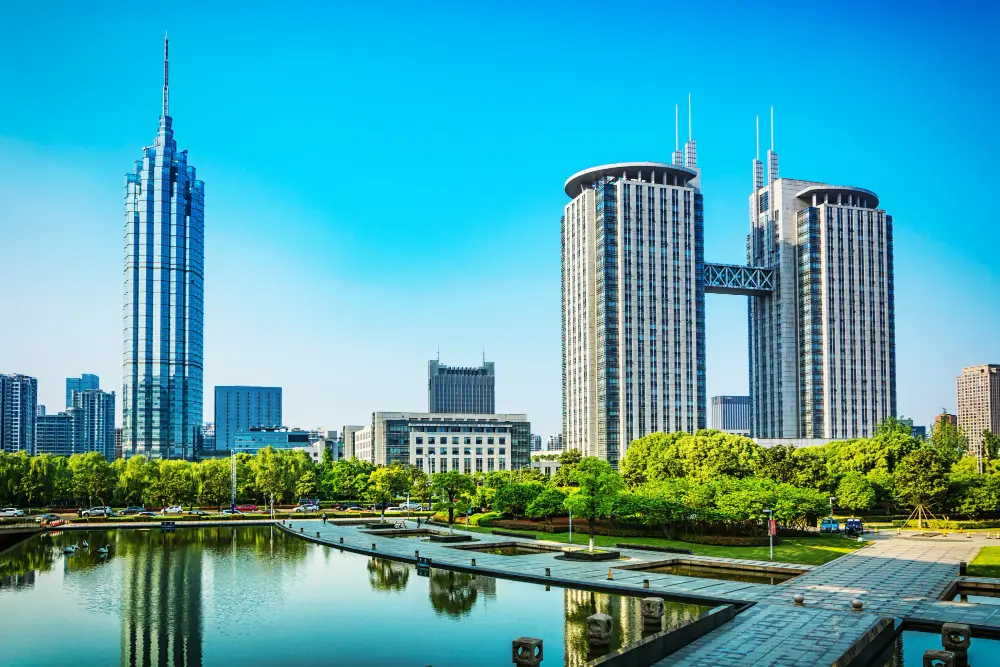
List of the Most Famous Buildings in Dubai
There’s a reason why people from every corner of the world have Dubai on their bucket list. You land at the airport, look out the taxi window, and within minutes you’re staring at a skyline that looks like it was designed by someone who genuinely had no interest in limits. Dubai is famous for its ambition, and nowhere is that ambition more visible than in its buildings.
Whether you’re a curious traveller, a seasoned investor scoping property opportunities, or a business owner thinking about planting roots in the UAE, understanding the famous buildings in Dubai gives you more than just Instagram content. It gives you a window into how this city thinks, plans, and builds its future. And in 2026, that future looks bigger than ever.
This guide covers the top landmark buildings in Dubai, the ones tourists photograph, the ones that define the skyline, and a few underrated gems that don’t always make the headlines but deserve a place on this list. We’ve kept it straightforward, informative, and honest.
Dubai Architecture at a Glance (2026)
Before we dive in, here’s a quick snapshot of why Dubai’s built environment is unlike any other place on earth.
| Metric | Dubai Figure | Global Context |
|---|---|---|
| Tallest Building | Burj Khalifa – 828 m | World’s tallest since 2010 |
| Skyscrapers (150m+) | 200+ | 4th highest globally |
| UNESCO-listed sites in the UAE | 1 (Al Ain Oasis) | Heritage conservation growing |
| Annual tourists (2025) | ~18.7 million | Architecture is a top draw |
| New towers under construction (2026) | 50+ | Supply continues to grow |
Why Is Dubai Famous for Architecture?
It didn’t happen by accident. Dubai’s architectural ambition grew from a very specific vision to build a city that would attract global talent, tourism, and investment even after oil revenues declined. The government backed bold designs, gave developers room to experiment, and the results speak for themselves.
A few key reasons Dubai became a global architecture capital:
- No historical skyline to protect: Unlike London or Paris, Dubai had no Victorian terraces or classical facades to preserve. Developers could build vertically from the start.
- Government-backed mega-projects: Projects like the Palm Jumeirah and Downtown Dubai were state-level decisions, not private speculations.
- Global competition for records: Dubai consciously chased ‘world’s tallest’, ‘world’s largest’, ‘world’s first’, and won many of them.
- Year-round construction climate: Dry, stable weather allows near-continuous building, dramatically shortening project timelines.
- Tax-free environment: No income or capital gains tax attracted the world’s best architectural firms to base regional offices here.
If you’re curious about how this architectural energy translates into real estate value and investment returns, our guide on why international investors prefer Dubai over other cities in 2026 breaks it down in detail.
The Most Famous Buildings in Dubai: Full List
Let’s get into the buildings themselves: iconic, unique, and worth knowing about, whether you’re visiting or investing.
1. Burj Khalifa – The Crown of the Dubai Skyline
No list of famous buildings in Dubai can start anywhere other than here. Standing at 828 metres across 163 floors, the Burj Khalifa is the world’s tallest building and the undisputed centrepiece of the city. Completed in 2010, it sits at the heart of Downtown Dubai and is visible from nearly 95 km away on a clear day.
Key facts at a glance:
- Height: 828 metres (2,717 ft)
- Floors: 163 (including service floors)
- Architect: Adrian Smith of Skidmore, Owings & Merrill (SOM)
- Location: Downtown Dubai
- Observation decks: At the Top (124th floor) and At the Top Sky (148th floor)
- Mixed use: Residential, corporate offices, hotel (Armani Hotel), and retail
What makes the Burj Khalifa architecturally brilliant is its Y-shaped floor plan, inspired by the Hymenocallis desert flower. This shape reduces wind load and allows maximum floor space at each level. The spire doesn’t just add height; it actually makes the structure more stable.
2. Burj Al Arab – The Sail That Became a Symbol
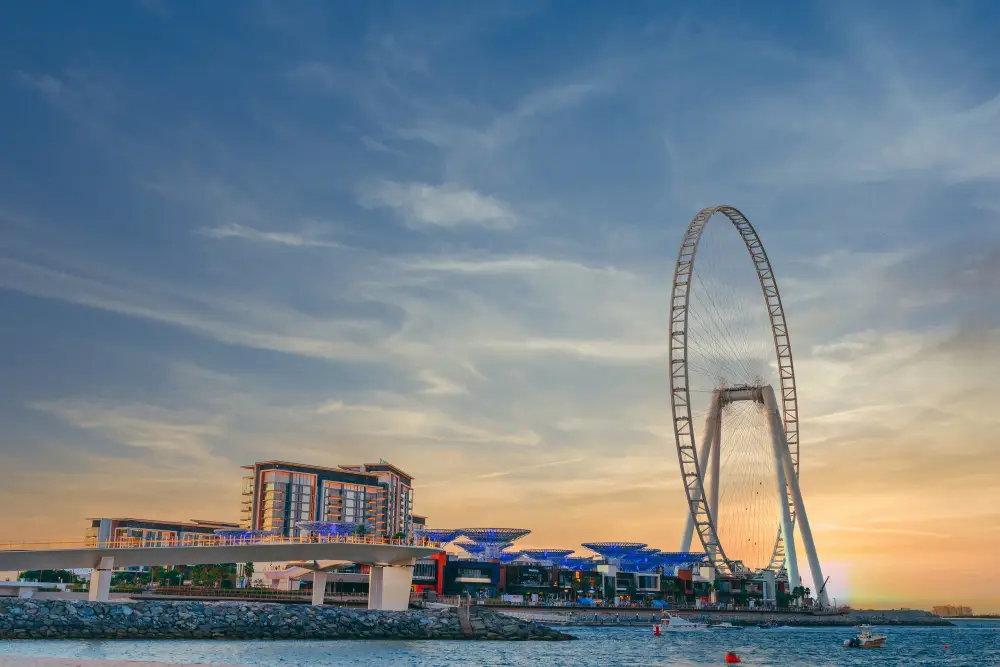
If the Burj Khalifa is Dubai’s height, the Burj Al Arab is its soul. Designed by Tom Wright and opened in 1999, this sail-shaped tower stands on an artificial island 280 metres off Jumeirah Beach and is one of the most photographed Dubai monuments in the world.
- Height: 321 metres
- Architect: Tom Wright / WS Atkins
- Rooms: All-suite hotel, 202 duplex suites
- Notable feature: Helipad at 210 metres, famously used for tennis, golf, and motor sports stunts
- Classification: Often self-described as ‘seven-star’, though no official rating system goes that high
The building is supported by 250 concrete piles drilled 45 metres into the seabed. The Teflon-coated glass fibre fabric facade glows gold at night, making it unmistakable on the Jumeirah coastline. It’s a landmark building in Dubai that doubles as a functioning hotel and a piece of art.
3. Cayan Tower – Dubai’s DNA Twist
One of the most structurally fascinating and unique buildings in Dubai, the Cayan Tower in Dubai Marina twists exactly 90 degrees from base to top. Each floor is rotated slightly relative to the one below it, producing a striking helical silhouette.
- Height: 306 metres, 73 floors
- Architect: Skidmore, Owings & Merrill
- Location: Dubai Marina
- Use: Residential apartments with luxury amenities
- Unique claim: Was the world’s tallest twisting tower when completed in 2013
The spiral design isn’t just aesthetic. The rotation dramatically reduces the wind load on the structure and eliminates monotonous floor plates, making every apartment feel slightly different from the one above or below.
4. Dubai Frame – Old City Meets New City
The Dubai Frame is perhaps the most conceptually clever of all famous buildings in the UAE. Opened in 2018, it’s exactly what it sounds like: a giant picture frame, 150 metres tall, straddling the border between historic Zabeel Park and the modern Zabeel district. Stand inside, and you can see old Dubai to the north and the glittering towers of New Dubai to the south, all through a glass sky bridge that connects the two towers at the top.
- Height: 150 metres
- Architect: Fernando Donis
- Location: Zabeel Park, Umm Hurair 2
- Sky bridge: Glass-floored walkway at the top connecting both towers
- Purpose: Tourist attraction and architectural monument
5. The Address Downtown Dubai – Elegance in the Centre
Sitting right next to the Dubai Fountain and the Burj Khalifa, The Address Downtown is one of the most elegant and famous towers in Dubai. The 63-storey tower serves as both a luxury hotel and branded residences and is widely considered one of the best-positioned properties in the city.
- Height: 302 metres
- Location: Downtown Dubai, adjacent to Dubai Mall
- Use: Hotel and luxury serviced residences
- Notable: Front-row views of the Dubai Fountain and Burj Khalifa light shows
For investors looking at Downtown Dubai properties, our detailed Business Bay area guide covering towers, apartments, and investment insights is a good starting point; Business Bay borders Downtown and shares many of the same market dynamics.
6. Dubai Opera – Culture in the Downtown Core
Not every iconic building needs to be the tallest. Dubai Opera, opened in 2016, is shaped like a traditional dhow, the wooden sailing vessels that have long been part of UAE maritime heritage. It seats 2,000 people and hosts opera, theatre, ballet, and classical music in a city more often associated with commerce than culture.
- Architect: Janus Rostock / Atkins
- Location: Downtown Dubai, The Opera District
- Capacity: 2,000 seats (can be reconfigured)
- Facade: Inspired by a traditional dhow with automated vents for natural ventilation
Dubai Opera added cultural weight to what was previously seen as a purely commercial skyline. It’s become one of the most important UAE landmarks for the arts.
7. Empire Heights – Twin Towers in Business Bay
Empire Heights is a twin-tower development located in Business Bay. Standing at 48 floors each, both towers together create a distinctive presence along the Dubai Water Canal. They house a mix of commercial offices and residential apartments, making them a genuinely mixed-use address at the heart of Dubai’s most active commercial district.
- Location: Business Bay
- Use: Mixed-use – commercial and residential
- Notable: Views of Dubai Water Canal and the Downtown skyline
- Investment appeal: Business Bay’s proximity to Downtown makes these towers a popular choice for mid-to-high-end renters
8. The Iridium Building – Standout Commercial Architecture
The Iridium Building in Al Barsha is one of Dubai’s more distinctive popular buildings that doesn’t always make tourist lists but is well-known among commercial property tenants and real estate professionals. It’s a premium Grade-A commercial tower with modern facilities and strong connectivity to the rest of the city via Sheikh Zayed Road.
- Location: Al Barsha, near Sheikh Zayed Road
- Use: Commercial offices
- Notable: Contemporary glass-and-steel facade, LEED-compliant design features
- Appeal: Attracts multinational businesses and regional headquarters
9. Palace Towers Dubai – Residential Prestige in Silicon Oasis
Palace Towers Dubai is a twin-tower residential complex in Dubai Silicon Oasis. They sit within a technology-focused free zone and offer a modern urban living environment. The towers feature mid- to high-end apartments and are a popular address for tech professionals working in the surrounding business ecosystem.
- Location: Dubai Silicon Oasis
- Use: Residential – studios, 1, 2, and 3-bedroom apartments
- Notable: Access to DSO’s retail, dining, and business facilities
- Investment angle: Silicon Oasis offers higher relative yields than more central areas
10. Red Diamond Building Dubai – Bold and Geometric
Red Diamond Building Dubai is one of those unique buildings in Dubai that catches your eye precisely because it doesn’t look like anything else nearby. The distinctive red cladding and diamond-inspired architectural details make it immediately recognisable. Located in Deira, it’s a reminder that not all of Dubai’s architectural ambition is concentrated on the Sheikh Zayed Road corridor.
- Location: Deira
- Use: Commercial and mixed-use
- Distinctive feature: Red facade with geometric diamond patterning
11. Al Attar Business Tower – Sheikh Zayed Road Stalwart
Al Attar Business Tower is a 30-storey commercial tower on Sheikh Zayed Road. It’s been part of Dubai’s skyline long enough to have earned its place among the city’s recognisable famous buildings in the UAE. Known for its reflective glass exterior and premium office spaces, it caters primarily to corporate clients who want a Sheikh Zayed Road address without the newest-tower price tag.
- Location: Sheikh Zayed Road
- Use: Commercial offices
- Floors: 30
- Appeal: Established business address, good public transport access
12. Al Kifaf Building – Near Al Wasl, Quietly Functional
Al Kifaf Building in the Al Kifaf neighbourhood near Za’abeel is a mixed-use commercial building that serves local businesses and professional firms. It’s not among the flashiest buildings in this list, but it represents the workhorse commercial stock that Dubai’s mid-market business community relies on daily.
- Location: Bur Dubai, near Zabeel Park
- Use: Commercial offices & residential towers
- Floors: Different towers and blocks, with 4-44 floors.
13. Arenco Building – Dubai Investments Park
Arenco Building is one of several commercial properties under the Arenco Real Estate portfolio. Arenco is a well-established name in the UAE property development sector, and its buildings are known for reliable construction quality and pragmatic layouts that serve businesses well.
- Location: Dubai Investments Park 1 (DIP 1)
- Use: Commercial complex used for offices and retail spaces
- Floors: 4 towers, each with 7 storeys
14. Blue Bridge Dubai – A Crossing Turned Landmark
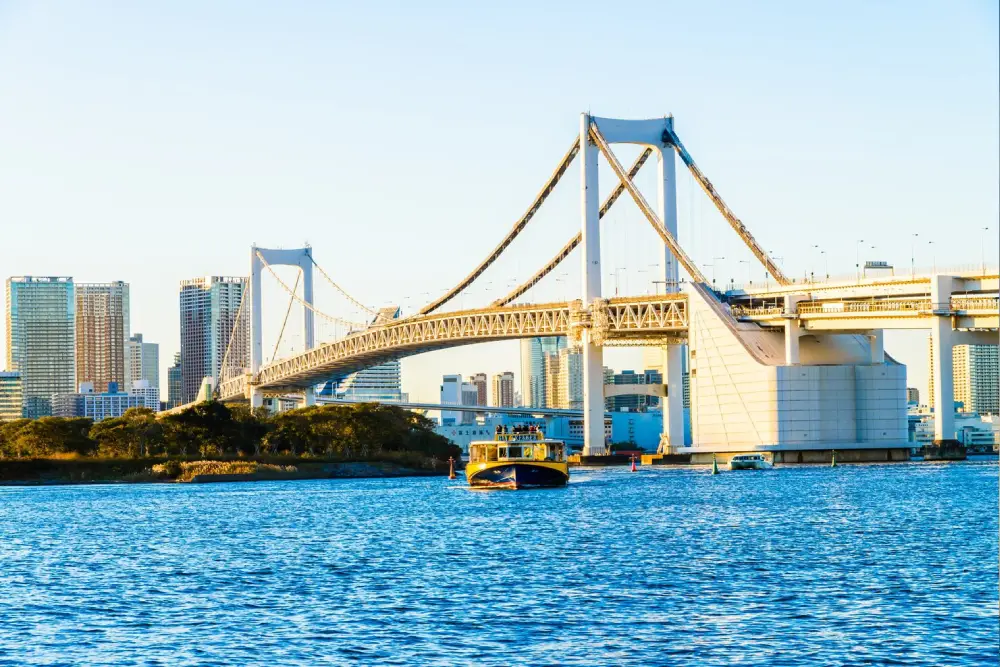
Blue Bridge Dubai connects the two sides of the Dubai Water Canal in Business Bay. More than just infrastructure, it has become a visual landmark in its own right, particularly at night when it’s illuminated against the canal water. The canal walkway is popular for evening strolls and has attracted cafes and restaurants to its banks.
- Location: Dubai Water Canal, Business Bay
- Notable: LED illumination creates a striking reflection in the canal at night
- Nearby: Several luxury towers, restaurants, and waterfront promenades
15. Lahej & Sultan Building, Dubai – Deira Heritage
Lahej & Sultan Building in Dubai is located in Deira, one of the oldest commercial districts in the city. While newer developments dominate the headlines, buildings like this are part of what makes Dubai’s commercial real estate ecology complete; they serve the trading community, small businesses, and import/export firms that have been the backbone of Dubai’s economy for decades.
Are there historic buildings in Dubai? Absolutely, and many of them sit in Deira and Bur Dubai, where the city’s original trading history is preserved through architecture that predates the skyscraper era.
Famous Buildings in Dubai: Quick Comparison Table
| Building | Location | Height / Floors | Primary Use | Built / Opened |
|---|---|---|---|---|
| Burj Khalifa | Downtown Dubai | 828 m / 163 fl | Mixed | 2010 |
| Burj Al Arab | Jumeirah Beach | 321 m / 56 fl | Hotel | 1999 |
| Cayan Tower | Dubai Marina | 306 m / 73 fl | Residential | 2013 |
| Dubai Frame | Zabeel Park | 150 m | Attraction | 2018 |
| The Address DT | Downtown Dubai | 302 m / 63 fl | Hotel/Res. | 2008 |
| Dubai Opera | Opera District | N/A | Cultural | 2016 |
| Empire Heights | Business Bay | 48 fl (twin) | Mixed | 2012 |
| The Iridium Bldg | Al Barsha | ~30 fl | Commercial | 2012 |
| Palace Towers | Silicon Oasis | ~25 fl (twin) | Residential | 2013 |
| Red Diamond Bldg | Deira | ~20 fl | Commercial | 2008 |
| Al Attar Tower | Sheikh Zayed Rd | ~30 fl | Commercial | 2003 |
| Blue Bridge | Dubai Water Canal | N/A | Infrastructure | 2016 |
| Lahej & Sultan | Deira | ~12 fl | Commercial | Pre-2000 |
What Makes Dubai’s Skyline Unique?
Most cities grow their skylines organically over decades. Dubai did it in about 30 years, and it did it with a deliberate, visual strategy that few cities have matched. Here’s what sets it apart:
- Diversity of form: You won’t find two towers that look the same. Twisted, sail-shaped, Y-shaped, diamond-faceted; Dubai architects were clearly told to compete, not conform.
- Waterfront integration: The Marina, the Palm, the Dubai Water Canal, Jumeirah Beach, nearly every famous tower has a water view or water relationship built into its design.
- Lighting as architecture: At night, Dubai’s skyline changes completely. LED facades, rooftop illumination, and canal reflections turn the city into a live light installation.
- Density without uniformity: Dubai Marina packs over 200 towers into a relatively small area, yet each tower maintains a distinct identity.
- Sustainable ambition in 2026: New towers increasingly incorporate LEED certification, solar shading, and smart building management systems; the skyline is going green, one tower at a time.
This architectural diversity directly supports Dubai’s tourism economy. Curious how that connection works? Our article on the impact of tourism on Dubai’s real estate explains how visitor footfall translates into property demand and rental yields.
Height Comparison: Dubai’s Tallest Iconic Buildings
A visual sense of scale for Dubai’s most famous towers:
| Building | Height | Relative Scale (each block = ~50m) |
|---|---|---|
| Burj Khalifa | 828 m | ████████████████ (16 blocks) |
| Cayan Tower | 306 m | ██████ (6 blocks) |
| The Address Downtown | 302 m | ██████ (6 blocks) |
| Burj Al Arab | 321 m | ██████ (6 blocks) |
| Dubai Frame | 150 m | ███ (3 blocks) |
The Investment Angle: What These Buildings Mean for the Property Market
For investors and business owners, Dubai’s famous buildings aren’t just landmarks; they’re market anchors. Properties within walking distance of the Burj Khalifa, Burj Al Arab, or Dubai Opera command a premium that has historically held up even through market corrections.
Here’s how proximity to landmark buildings affects property values:
| Area/Landmark | Avg. Rental Yield (2025) | Buyer Demand Trend |
|---|---|---|
| Downtown Dubai (Burj Khalifa) | 5.5% – 6.5% | Stable, luxury demand |
| Dubai Marina (Cayan Tower) | 6.0% – 7.0% | Growing, expat-driven |
| Business Bay (Empire Heights) | 6.5% – 7.5% | Strong, commercial crossover |
| Silicon Oasis (Palace Towers) | 7.0% – 8.5% | Rising value sector |
| Jumeirah Beach (Burj Al Arab area) | 5.0% – 6.0% | Selective, high-end |
For a deeper analysis of where the highest yields are in 2026, check out our comprehensive guide to the highest ROI areas in Dubai real estate. It maps out neighbourhood-by-neighbourhood returns with the kind of data you can actually use to make decisions.
If you’re weighing whether to buy or rent near one of these landmarks, our renting vs buying in Dubai guide walks through the real financial comparison, not just the emotional one.
Dubai Monuments Tourists Can Visit: A Practical Checklist
Not every famous building is open to tourists. Here’s a quick guide to what you can actually see and access:
| Monument/Building | Visitor Access | What To Do There |
|---|---|---|
| Burj Khalifa | Yes – ticketed | Observation decks (124th & 148th floor), ‘At the Top’ experience |
| Burj Al Arab | Hotel guests & reservations | Afternoon tea, restaurant dining, lobby visit by reservation |
| Dubai Frame | Yes – ticketed | Glass sky bridge walk, views of old and new Dubai simultaneously |
| Dubai Opera | Yes – event tickets | Opera, ballet, concerts, theatre – booking required |
| Cayan Tower | No public access | Best viewed from Dubai Marina Walk or JBR Beach |
| Blue Bridge Dubai | Yes – free | Walk across, Dubai Water Canal views, evening illuminations |
| The Address Downtown | Hotel guests & diners | Rooftop bar, hotel dining, and pool access for guests |
Coming Soon: The Next Generation of Famous Dubai Buildings
Dubai isn’t slowing down. In 2026, several towers are either under construction or in advanced planning that could join this list within the next few years. Here are the ones generating the most conversation:
- Burj Azizi: Currently under construction in Al Wasl, set to become the world’s second-tallest building at approximately 725 metres.
- The Orbit Tower: A mixed-use development near Meydan with a spiralling glass profile.
- Jumeirah Central: A multi-tower masterplan that will add a cluster of skyscrapers between Downtown and the beach.
- Mercedes-Benz Places | Binghatti City: A branded residential tower blending automotive luxury with high-rise living, a project covered in detail in our Mercedes-Benz Places Binghatti review.
The pace of new construction also means the off-plan market is particularly active right now. If you’re considering an early entry, our off-plan vs ready-to-move properties guide for 2026 will help you understand the risks and benefits before you commit.
Final Word from Habico Properties
Dubai’s famous buildings are more than visual spectacles. They’re proof of what sustained investment in architecture and infrastructure can do for a city’s global standing. Every tower on this list, from the Burj Khalifa to the quieter presence of Empire Heights or the Iridium Building, has played a role in making Dubai the property market it is today.
For investors, the connection between iconic architecture and real estate value is direct and measurable. Landmark buildings drive foot traffic, tourism, media coverage, and ultimately, demand for properties in their vicinity. That’s why Dubai keeps building, and why investors keep coming.
If you’re thinking about buying property in Dubai, renting near a landmark district, or exploring off-plan opportunities in communities that will define Dubai’s next chapter, Habico Properties is based right in the heart of it – Churchill Tower, Business Bay. We know this market because we work in it every day.
Explore our Dubai residential areas guide to find the right neighbourhood for your budget and lifestyle, or get in touch directly with our team to start a conversation about your specific goals.
Frequently Asked Questions
What is the most famous building in Dubai?
The Burj Khalifa is universally recognised as the most famous building in Dubai and in the world. At 828 metres, it has held the record as the world’s tallest building since 2010 and remains the defining image of Dubai’s skyline globally.
Why is Dubai famous for its architecture?
Dubai built its skyline from scratch in just a few decades, with no historical buildings to work around, a pro-development government, and access to global architectural talent. The result is a city where record-breaking, experimental, and visually stunning designs exist side by side in a relatively small geographic area.
What are the top landmark buildings in Dubai?
The top landmark buildings in Dubai include the Burj Khalifa, Burj Al Arab, Cayan Tower, Dubai Frame, Dubai Opera, and The Address Downtown. Each one is instantly recognisable and represents a different facet of Dubai’s architectural ambition.
Are there historic buildings in Dubai?
Yes. While Dubai is known for modern towers, areas like Deira, Al Fahidi (Al Bastakiya), and Bur Dubai contain buildings dating back to the 19th and early 20th centuries. The Al Fahidi Historical Neighbourhood in particular features traditional wind-tower architecture typical of Gulf trading settlements.
What are the most unique buildings in Dubai?
The Cayan Tower (twists 90 degrees), Dubai Frame (a giant architectural picture frame), and Burj Al Arab (sail-shaped on an artificial island) are widely considered the most unique buildings in Dubai for their unconventional forms. The Red Diamond Building and the Iridium Building also stand out in their respective neighbourhoods.
What monuments can tourists visit in Dubai?
Tourists can visit the Burj Khalifa observation decks, the Dubai Frame glass bridge, the Blue Bridge over the Dubai Water Canal, and Dubai Opera (for events). The Burj Al Arab is accessible by reservation for dining or afternoon tea.
Which building is the tallest in Dubai?
The Burj Khalifa, at 828 metres, is the tallest building in Dubai and the tallest in the world as of 2026. The Burj Azizi, currently under construction, may surpass it within the next few years if completed on schedule.
What makes Dubai’s skyline unique?
Dubai’s skyline stands out because of its combination of structural diversity (no two towers look the same), water integration, dramatic nighttime lighting, and extreme density of skyscrapers built within a very short timeframe. It’s a skyline built by design rather than by gradual urban growth.