

Dubai Residential Areas Guide 2026: Best Communities to Live & Invest In
Choosing where to live in Dubai is one of the most significant decisions you might ever make as a resident or investor in the UAE. And especially in 2026, the options are genuinely extraordinary that you can easily get trapped, uncertain, and overwhelmed.
The city now stretches across a collection of masterfully planned communities, each with its own identity, price point, and lifestyle proposition. Some are built around golf courses, others orbit marinas, and a few are being designed from scratch with sustainability targets that would surprise you. The challenge isn’t a shortage of options; it’s knowing which area actually fits your life.
At Habico Properties, we work across every segment of the Dubai market every day. This guide is the result of that on-the-ground experience, backed by the latest 2026 data on rental yields, property values, school access, infrastructure, and community demand. Whether you’re a family relocating from abroad, a young professional looking for your first apartment, or an investor mapping out a strong ROI-centric portfolio, consider this your honest, no-fluff starting point.
Why Dubai Residential Areas Stand Out in 2026
Dubai has spent the last two decades building one of the most coherent urban environments in the world. The city operates under a single planning vision that means roads are wide, utilities are reliable, and new communities arrive with schools, parks, and retail already laid out before the first residents move in.
But what makes Dubai’s residential map particularly compelling right now is the combination of factors that don’t typically converge in the same city.
You get a zero-income-tax environment, rental yields that routinely outperform London and New York by a factor of two or three, a growing Golden Visa programme that ties long-term residency to property ownership, and a population that continues to expand.
That means demand for housing remains structurally strong regardless of short-term market fluctuations.
In 2025, Dubai’s property sales reached a record AED 559.4 billion, and 2026 is showing no signs of cooling down. The mix of end-users and investors is healthier than it’s ever been, with a growing share of buyers planning to actually live in the properties they purchase rather than simply hold them for speculation.
Dubai’s average gross rental yield in 2026 sits at approximately 7.07% for new rental contracts, which is roughly double what investors can expect in London, New York, or Hong Kong, with zero property income tax on top of that.
~Dubai Rental Market Data, Q1 2026
The city’s demographics are also worth understanding.
Dubai’s residential population is overwhelmingly expatriate, meaning more than 85% of residents were born outside the UAE. And that means communities here are genuinely international.
English is the common language of day-to-day life, international schools are widely available, and social infrastructure is built around people who are often new to the city and looking for community. If you’re moving from abroad, that’s a significant advantage compared to many other global cities where expat integration is slower and more effortful.
Habico’s special guide on Renting vs Buying: Which is Better for You in Dubai can help you learn more about finding the best residential option.
Luxury Residential Areas in Dubai
Dubai’s luxury property market occupies a different tier from almost anywhere else in the world.
It isn’t simply about high prices; it’s about genuinely curated living environments where architecture, infrastructure, and service operate at an exceptional standard.
The following are the communities where that promise is most consistently delivered.
Palm Jebel Ali
If Palm Jumeirah defined Dubai’s first generation of prestige waterfront living, Palm Jebel Ali is the sequel, and it’s considerably more ambitious.
Covering a larger footprint with more beach frontage, lower density, and a design philosophy shaped by a decade of lessons learned from the original Palm, this is where high-net-worth buyers are positioning themselves for the long term.
Beachfront villas here represent some of the most coveted residential real estate in the entire Middle East.
Palm Jumeirah
The original artificial island remains the benchmark for luxury waterfront living in the city, with its fronds home to signature villas and The Crescent offering ultra-luxury apartment experiences.
Hotel amenities, private beach access, and a brand recognition that stretches to every corner of the globe keep Palm Jumeirah in a category of its own for both buyers and tenants.
Mohammed Bin Rashid City (MBR City)
MBR City is where modern luxury meets generous scale.
Positioned near Downtown with the world’s largest crystal lagoon as its centrepiece, this district blends landscaped green spaces with contemporary architecture in a way that feels genuinely unlike most of Dubai.
High-end villas, townhouses, and premium apartments sit alongside top-tier retail and entertainment, and the quality of finishes across developments here is consistently excellent.
Emirates Hills
Often called the Beverly Hills of Dubai, Emirates Hills is the city’s most exclusive gated villa community.
Mansions set against the Montgomerie Golf Course, a residents-only atmosphere, and an address that still carries extraordinary prestige after two decades.
It doesn’t offer the same diversity of property types as newer luxury communities, but for those seeking the absolute height of private, established residential living in Dubai, it remains unmatched.
Al Barari
Dubai’s greenest luxury community, Al Barari, is an anomaly in the best possible sense.
More than half of its footprint is dedicated to botanical gardens, themed gardens, streams, and natural landscaping.
Villas and apartments are set within this greenery rather than beside it. Wellness facilities, organic dining at The Farm restaurant, and a residents-only culture make it the favourite of those who want luxury living without the urban intensity of Downtown or Marina.
Best Waterfront Communities in Dubai
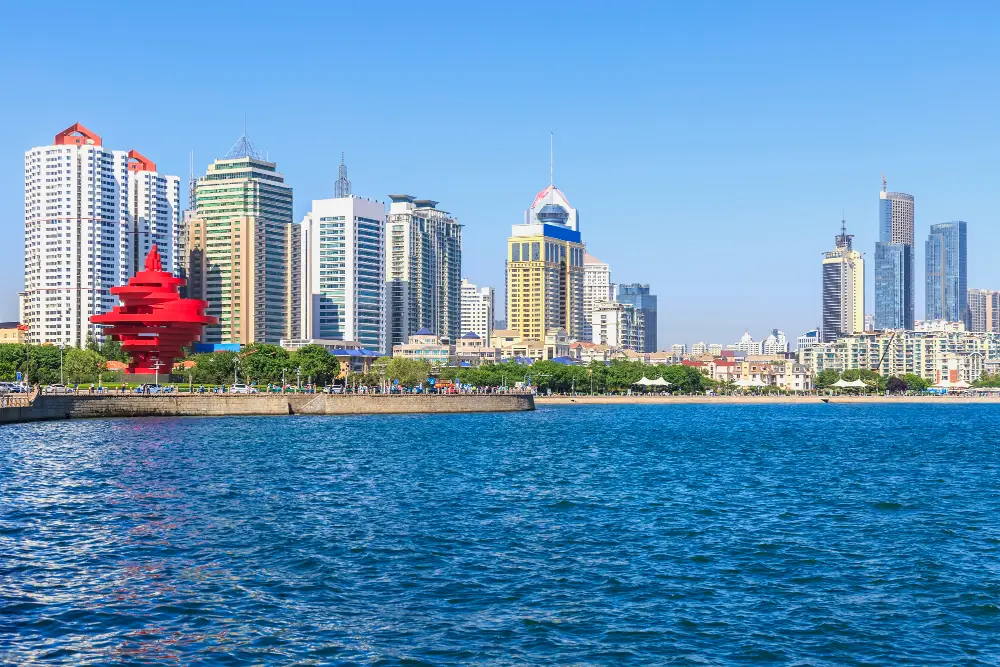
Waterfront living carries a particular premium in Dubai, not just as a lifestyle statement but as an investment consideration. Properties with water views and beach or marina access have historically outperformed comparable inland properties in both rental income and capital appreciation.
Let’s provide you with a holistic picture of the top waterfront communities in Dubai.
Dubai Marina
The most active and densely inhabited waterfront community in the city.
A 3km marina ringed by residential towers, restaurants, cafes, and the Dubai Marina Mall, all connected by a boulevard that actually gets used by its residents daily.
The Dubai Tram and two Metro stations make it genuinely accessible. It’s widely popular with professionals and couples looking for waterfront apartments in Dubai.
Dubai Creek Harbour
Emaar’s ambitious Creekside development is positioned to eventually exceed Downtown Dubai in scale, with a tower planned to surpass even the Burj Khalifa in height.
Dubai Creek Harbour offers stunning creek and skyline views, a growing retail and dining scene, a yacht club, and some of the most photogenic residential settings in the city.
Dubai Creek Harbour offers strong long-term appreciation potential as the area continues to fill out.
Mina Rashid Marina
A newer waterfront community centred on the historic Rashid Port that is rapidly gaining attention from both residents and investors.
The Queen Elizabeth 2 floating hotel is permanently anchored here, forming the anchor of a growing hospitality, dining, and retail district.
Residential towers are newer, finishes are high, and the authentic maritime heritage of the area gives it a distinctive character.
Palm Jumeirah
The world’s most recognizable artificial island.
Beyond its status as a luxury landmark, Palm Jumeirah is a genuinely functioning waterfront community with a Monorail connection, a string of beach clubs, and everything from hotel residences to standalone beachfront villas.
Rental yields are lower here (typically 4-6%), but capital appreciation remains a strong long-term argument.
JBR: Jumeirah Beach Residence
JBR sits directly on the open beach of the Arabian Gulf and is one of the most pedestrian-friendly areas in all of Dubai.
The Walk, a 1.7km beachfront promenade, is a functioning social hub rather than a tourist attraction, which makes living here feel genuinely pleasant at a human scale.
It’s attached to Dubai Marina, giving residents access to both environments.
Still looking for more? Read through the Best Waterfront Communities for Families in Dubai, a guide with brief information for everyone who wants the best waterfront properties in Dubai.
Best Residential Areas in Dubai: Our Top Picks
There is no single best area in Dubai; the right community depends entirely on your priorities.
Below we’ve selected a cross-section of the most compelling Dubai neighbourhoods for 2026, spanning different price points, lifestyles, and investment profiles.
Downtown Dubai, The Most Iconic Pick
Home to the Burj Khalifa, Dubai Mall, and the Dubai Fountain, Downtown is the city’s cultural and commercial heart.
Apartments range from compact studios to sky-high penthouses, and Metro access is excellent. It’s genuinely urban, loud, bright, and alive at all hours. Best suited to professionals who want to be at the centre of everything.
Typical gross rental yield: 6-6.5%. Plus, Metro access is the top advantage of choosing Downtown Dubai to live or invest in.
Dubai Marina, One of the Most Popular Areas in Dubai
Consistently ranked as the city’s most-searched community, Dubai Marina delivers a walkable waterfront lifestyle that’s hard to find elsewhere in Dubai.
The 3km marina promenade, dense restaurant scene, and Dubai Tram connection give it a genuine urban texture.
Popular with young professionals, couples, and short-term investors seeking holiday home returns. Typical gross rental yield: 6-7.5%. And, the waterfront is the main fascination.
Dubai Hills Estate: Best for Families
Emaar’s flagship master-planned community sits midway between Downtown and Marina. This means you’re never far from anything.
Golf course, 54km cycling and jogging track, Dubai Hills Mall, multiple schools. Villas, townhouses, and apartments are all available.
Probably the most balanced community in Dubai for a family that wants greenery, safety, and connectivity simultaneously. Typical gross rental yield: 5.5-7%. And, golf and parks, which everyone wants, are a few primary offerings here.
Jumeirah Village Circle (JVC): The Best Value Ever
JVC is the workhorse of Dubai’s residential market; practical, affordable, and consistently high-yielding.
Over 350 apartment buildings and townhouse clusters, parks throughout, and reasonable proximity to both Marina and the city’s business zones.
It’s the area most real estate professionals recommend first to budget-conscious families and first-time investors alike. Typical gross rental yield: 7-9.5%. And guess what? A high ROI, which makes it the top choice for investors.
Arabian Ranches, the Suburban Classic
Dubai’s original suburban escape, villas and townhouses wrapped around an equestrian club and golf course.
Arabian Ranches has consistently attracted families who want space, quiet streets, and a genuine neighbourhood feel. It’s one of the most pet-friendly communities in the city, and the school choices within and around it are strong. Typical gross rental yield: 5-6.5%. A gated community is the key feature you get in Arabian Ranches.
Emirates Living, The Established & Green
A collection of mature communities: The Springs, The Lakes, The Meadows, and the ultra-exclusive Emirates Hills, that feel genuinely settled and lived-in rather than freshly built.
Leafy, lake-dotted, and well-run. Particularly popular with long-term expat families who value stability and a strong sense of community over novelty. Typical gross rental yield: 5-6%.
Business Bay: The Urban Investment
A dense, skyline-forward district adjacent to Downtown and spanning the Dubai Canal.
Heavy on serviced apartments and hotel residences, Business Bay suits professionals who commute to DIFC or Downtown and want proximity over space. Rental yields are solid at 6-7%, and the canal-facing units carry a genuine lifestyle premium.
Dubai Silicon Oasis: The Tech & Family Hub
A self-contained free zone community that has quietly evolved into one of the city’s most liveable mid-budget areas.
Organized, uncrowded, and genuinely family-oriented: with parks, lakes, cycling tracks, and a community feel that larger developments sometimes lose.
Strong on yield, accessible on price, and well-connected via major road links. Typical gross rental yield: 7-8%.
Most Affordable Areas to Live in Dubai
Affordability in Dubai is relative; the city is not cheap.
But several communities deliver genuine quality of life at a price point well below the headline numbers that Dubai often gets associated with.
If your priority is getting the most liveable environment for your budget, these are the areas that repeatedly come out on top.
Jumeirah Village Circle (JVC)
JVC’s combination of affordable entry prices, comprehensive community amenities, and strong rental demand has made it the single most searched area for value-conscious buyers in Dubai.
Studios to three-bedroom apartments are available across more than 350 buildings, with the average sale price sitting considerably below that of Marina or Downtown.
Rental yields here consistently hit 7-9.5%, making it compelling for owner-occupiers and investors alike.
Dubai International City
For pure affordability, International City is hard to beat.
Studios and apartments start from around AED 250,000-350,000 for purchase, and rents can be among the lowest available in the Dubai market.
The trade-off is location; it sits in the Al Warsan area, further from major business districts. But for residents who work locally or value the low cost of living above commute convenience, this community delivers. Rental yields here can reach 8-9%, among the highest in the city.
Discovery Gardens
A long-established, affordable community popular with the city’s mid-income expat population.
Discovery Gardens sits close to Ibn Battuta Mall and has Metro access, which significantly offsets its western location.
It’s relaxed, well-maintained, and largely free of the congestion that affects some of Dubai’s denser affordable areas. Annual apartment rentals can start from AED 40,000 for smaller units.
Dubai Silicon Oasis
As a technology-free zone that has evolved into a genuine residential neighbourhood, DSO combines lower property prices with higher-than-average community quality.
Mid-rise buildings, lakes, jogging tracks, and community pools make day-to-day life comfortable without the premium price tag of more central districts.
Town Square
Nshama’s Town Square is a newer, affordable community positioned in the southern part of Dubai that has grown quickly since its launch.
A central park, cycling tracks, schools, healthcare, and a growing retail hub make it genuinely self-contained.
It’s designed around walkability in a way that many Dubai communities aren’t, and property prices remain some of the most accessible of any community with this level of amenity infrastructure.
You can learn more about Affordable Housing in the UAE & Opportunities for 2026 Investors in our brief guide.
Family-Friendly Areas in Dubai: Where to Raise a Family
Dubai has invested heavily in the infrastructure that makes family life work: international schools across every curriculum, community parks, dedicated cycling and pedestrian infrastructure, and a safe environment that consistently ranks among the most secure of any major global city.
The areas below stand out specifically for how well they serve families with children.
Dubai Hills Estate
It’s difficult to recommend a better all-round family community in Dubai right now.
The 18-hole golf course, 54km of greenways, Dubai Hills Park, and Dubai Hills Mall give families an enormous amount of lifestyle infrastructure without needing to leave the community.
Several international schools are within or adjacent to the community, and the road network connects quickly to most of the city. The mix of villa sizes, from 3-bedroom townhouses to sprawling 6-bedroom villas, means families can find the right fit at a range of price points.
Arabian Ranches (1, 2 & 3)
Three generations of the same master community, and each one has delivered a consistent formula: villas and townhouses in a gated setting, surrounded by greenery and supported by schools, parks, and community retail.
The original Arabian Ranches still feels mature and well-established; Arabian Ranches 3 is newer, slightly more affordable, and positioned for strong capital growth.
For equestrian families, the presence of the Dubai Polo & Equestrian Club is a genuine differentiator.
Nad Al Sheba
One of the most talked-about family areas of the past 18 months. Nad Al Sheba 1 sits just 10 minutes from Downtown via major roads, but feels spacious and neighbourhood-oriented rather than urban.
Wide green streets, dedicated cycling tracks, family parks, and quality community paths. The supply of villas and townhouses here is more limited than in Arabian Ranches, which also supports long-term property values.
Jumeirah (1, 2 & 3)
The original family-facing coastal area of Dubai, Jumeirah’s low-rise villa suburbs run along the beachfront and feel more like established residential neighbourhoods than most of Dubai’s master-planned communities.
Private villas, proximity to the beach, strong school options nearby, and a genuine street life. Property here is predominantly villa-only, which drives a quieter, more privacy-oriented community dynamic.
The Valley by Emaar
Positioned along the Al Ain Road corridor, The Valley is Emaar’s answer to the question of where growing families who can’t afford Dubai Hills Estate should look.
Townhouses and villas at more accessible price points, green open spaces built into the master plan, a Town Centre retail hub, and a school planned within the community.
It stands at roughly a 30-minute travel to Downtown, but what it gives back in space and value is considerable.
When looking for family-friendly areas, you should also know about the Best Schools Near Popular Residential Areas in Dubai, and our guide does exactly that for you.
Dubai Property Investment Areas: Yield Snapshot 2026
For investors, understanding which Dubai real estate investment areas deliver the strongest returns requires looking beyond the headline yield number.
Location, entry price, service charge levels, vacancy rates, and appreciation trajectory all feed into the real picture.
The table below gives a practical starting point.
| Community | Property Type | Gross Yield | Price Range (AED) | Investor Profile |
|---|---|---|---|---|
| International City | Apartments | 8-9% | 250K – 800K | Cash flow maximizer |
| Jumeirah Village Circle | Apts / Townhouses | 7-9.5% | 450K – 2.2M | Yield + growth balance |
| Al Furjan | Apartments | 7.5-8.5% | 500K – 1.8M | Emerging mid-market |
| Dubai Silicon Oasis | Apartments | 7-8% | 380K – 1.5M | Steady, tech hub demand |
| Business Bay | Apartments | 6-7% | 700K – 4M | Central, strong appreciation |
| Dubai Marina | Apartments | 6-7.5% | 750K – 6M+ | High occupancy, STR premium |
| Downtown Dubai | Apartments | 6-6.5% | 1.2M – 15M+ | Prestige + appreciation |
| Dubai Hills Estate | Villas / Apts | 5.5-7% | 1.5M – 20M+ | Family + long-term capital |
| Palm Jumeirah | Villas / Apts | 4.5-6% | 2M – 100M+ | Trophy asset, appreciation |
| Arjan | Apartments | 7-8% | 400K – 1.5M | Emerging, high growth potential |
A few important points worth noting here.
Gross yield is the headline number; net yield, which accounts for service charges, maintenance, and vacancy periods, is typically 1.5-2% lower.
In luxury communities like Palm Jumeirah, service charges can exceed AED 25-30 per sq ft, which meaningfully compresses your actual returns.
In more affordable communities like JVC or International City, service charges are lower (often AED 8-15 per sq ft), which is part of why their net yields remain competitive even after costs.
Studios and one-bedroom apartments tend to deliver the strongest yields across most communities, largely because entry prices are lower relative to rental demand.
If your goal is income rather than capital appreciation, these are typically the most efficient unit types to target.
Pro Tip: Read through our special guide on Commercial vs Residential Property Investment in Dubai to gain more insights for making better and informed decisions.
Freehold Areas in Dubai: What Expats and Foreign Buyers Need to Know
One of the most common questions we receive from international buyers is whether foreigners can actually own property in Dubai.
The answer is yes, but only in designated freehold areas.
Fortunately, the vast majority of the residential communities most relevant to expats and international investors have been designated freehold, meaning full ownership rights with no nationality restrictions.
Key freehold areas include:
- Downtown Dubai
- Dubai Marina
- Business Bay
- Palm Jumeirah
- JVC
- Dubai Hills Estate
- Arabian Ranches
- MBR City
- Dubai Creek Harbour
- The Valley
- Dubai Silicon Oasis
- And many others.
Almost every major master-planned community launched in the last 15 years has been developed within freehold zones.
Properties in non-freehold areas can typically only be purchased by UAE nationals or GCC citizens, though expats can rent property anywhere across the city regardless of freehold designation.
Purchasing a property worth AED 2 million or more in a freehold area now qualifies buyers for the UAE’s 10-year Golden Visa, a renewable long-term residency permit that isn’t tied to employment. This has fundamentally changed the calculus for international property buyers in Dubai.
~UAE Federal Authority for Identity and Citizenship, 2023–2026
Emerging Communities Worth Watching in 2026
Some of the best investment decisions in Dubai have historically been made in communities before they fully arrived, before the infrastructure was complete, before the schools opened, before the retail hubs filled in.
Below are the areas where that opportunity exists today.
Dubai South
Positioned around Al Maktoum International Airport, Dubai South is the city’s long-game community.
The airport expansion, projected to eventually handle 260 million passengers annually, is one of the biggest infrastructure projects currently underway in the world, and it will transform the employment and residential geography of Dubai’s southern corridor.
Property prices here are still accessible, but they are moving as the story becomes clearer to a wider buyer pool.
Grand Polo Club & Resort
A genuinely novel proposition: a residential community built around a working equestrian and polo facility.
Polo fields, stables, themed villas, and resort-style amenities in a setting that feels nothing like the rest of Dubai.
The niche positioning limits the buyer and tenant pool, but it also protects against oversupply, and the lifestyle appeal is strong enough to command a real premium among the right clientele.
The Oasis by Emaar
Emaar’s latest large-scale suburban community, The Oasis is positioned for families seeking spacious villa living with a modern, landscape-forward master plan.
Contemporary architecture, private gardens, parks, and retail hubs, all at price points below the premium of Dubai Hills Estate.
As the community develops, the gap between entry price and potential value should compress in buyers’ favour.
Damac Islands
Island-inspired community design on Dubai’s mainland, villas and townhouses designed around the visual language of island living, with lagoon-style landscaping and water features throughout.
An affordable entry point for buyers who want something that feels new and visually distinctive. Strong demand from the growing mid-income expat population.
Ghaf Woods
Perhaps the most unusual community on this list.
Designed to support over 20 native bird species and feature more trees than permanent residents, Ghaf Woods is an active ecological statement in residential form.
Outdoor temperatures are engineered to be up to 5°C cooler than surrounding areas through its dense native tree canopy.
Once complete, this is expected to be a benchmark community for sustainable residential living in the Middle East.
Why 2026 Is a Smart Moment to Act
Every year, someone says Dubai property is at its peak.
Every year, the market finds new reasons to justify its trajectory.
We’re not making bold predictions here, but we can tell you what the data actually looks like in early 2026.
Record transaction volumes with improving fundamentals. Dubai’s 2025 property market hit AED 559.4 billion in sales, its highest ever. Crucially, the buyer mix has shifted toward end-users, which underpins long-term market health better than a purely investor-driven surge.
Yields that outperform global benchmarks by 2-3x. At 6.7-7.3% average gross yields, Dubai apartments outperform London (2.5-4%), New York (3-5%), and Hong Kong (2-3%) while operating in a zero-income-tax environment. The net advantage is substantial.
Golden Visa driving long-term residency commitment. The 10-year Golden Visa programme has changed buyer psychology in Dubai. People are buying to live here permanently, not just as an asset play, and that deepens community infrastructure demand and property values.
Infrastructure investment at an unprecedented scale. From the Al Maktoum Airport expansion to new metro lines, school and healthcare expansion, and the ongoing delivery of major master communities, Dubai’s physical infrastructure investment is operating at full intensity.
Supply entering the market is matched by structural demand. New community completions are being absorbed at healthy rates, with occupancy levels above 90% in prime areas. The city’s population growth trajectory supports continued demand for well-located residential products.
Also Read: OFF-PLAN VS. READY-TO-MOVE PROPERTIES IN DUBAI: RISKS AND BENEFITS IN 2026
FAQs (Frequently Asked Questions)
Practical answers to the questions we hear most often from buyers, renters, and investors exploring Dubai residential areas.
What are the best residential areas in Dubai?
It depends on your lifestyle; Dubai Hills Estate leads for families, Dubai Marina for urban waterfront living, Arabian Ranches for suburban villa life, and JVC for value-conscious buyers and investors. For luxury, Palm Jumeirah and MBR City are in a class of their own.
Which area is best for families in Dubai?
Dubai Hills Estate consistently tops the list; greenways, parks, multiple schools, and a calm residential feel within easy reach of the city. Arabian Ranches is a close second, and for families on a tighter budget, The Valley and Town Square both deliver strong family infrastructure at more accessible price points.
What is the most affordable area to live in Dubai?
International City leads on pure affordability, with studio rentals from around AED 28,000 annually and purchase prices from AED 250,000. For a better balance of price and community quality, JVC and Dubai Silicon Oasis offer comfortable, well-maintained living well below Marina or Downtown rates.
Can foreigners buy property in Dubai residential areas?
Yes! Foreigners can purchase with full ownership rights in designated freehold zones, which include the majority of Dubai’s major communities, including Downtown, Marina, Palm Jumeirah, JVC, Dubai Hills Estate, and many more. Properties worth AED 2 million or more also qualify buyers for the UAE’s 10-year renewable Golden Visa.
What are the safest areas in Dubai?
Dubai is one of the safest cities in the world, and gated communities like Emirates Hills, Arabian Ranches, Dubai Hills Estate, and The Valley add another layer with 24/7 security, controlled access, and CCTV. For families with young children, low-traffic villa communities like Arabian Ranches, Jumeirah, and Nad Al Sheba are consistently highlighted for their quiet, walkable streets.
Which Dubai area has the highest rental yield?
International City leads with gross yields of 8-9%, while JVC follows closely at 7-9.5% and offers stronger long-term capital appreciation alongside the income. Al Furjan and Arjan both deliver 7-8.5%, making the mid-market segment consistently outperform luxury areas where yields typically sit at 4-6%.
Is Dubai good for long-term property investment?
Yes! No property tax, no capital gains tax, and no rental income tax mean net returns are significantly higher than equivalent-yielding properties in taxed markets. Strong population growth, Golden Visa incentives, and proven infrastructure investment make Dubai’s long-term property case one of the most compelling of any major global city.
What are the best waterfront communities in Dubai?
Dubai Marina and JBR are the most established choices for marina living, with direct beach access and a walkable promenade. Palm Jumeirah remains the city’s most iconic waterfront address, while Dubai Creek Harbour and Mina Rashid Marina offer newer options with strong long-term upside.