

10 Reasons Why You Should Invest in Dubai Real Estate
Dubai doesn’t just make headlines; it rewrites them. In 2025, the city’s real estate market recorded its highest-ever annual transaction volumes, surpassing AED 917 billion. And 2026 isn’t showing any signs of slowing down.
More importantly, the question most investors are now asking isn’t whether Dubai is a good market. It’s: “Am I already too late?” The short answer is no – and here is exactly why.
Whether you’re a first-time buyer, a seasoned portfolio builder, or a business owner looking for a long-term asset, these 10 reasons explain why real estate investment in Dubai remains one of the most compelling financial decisions you can make right now.
1. Zero Property Tax, Zero Capital Gains Tax
Let’s lead with the most powerful number in Dubai’s investment story: zero.
The UAE levies no annual property tax, no capital gains tax when you sell, and no income tax on rental earnings. This isn’t a temporary incentive or a phased-in policy; it’s the permanent structure of how the UAE government funds its economy.
For investors from the UK, USA, Canada, Australia, or Germany, markets where property is taxed multiple times over, this means your returns stay with you. The gross yield you earn is very close to your net yield. That single fact fundamentally changes the investment maths in Dubai’s favour compared to almost every other major global city.
2. Rental Yields That Outperform Most Global Markets
Average gross rental yields in Dubai sit between 6% and 9% annually, with select areas regularly exceeding that. Put that next to London (3-4%), New York (3.5-5%), or Singapore (2.5-4%), and the advantage is substantial and consistent.
The table below gives an honest snapshot of where yields currently stand across key communities:
| Area / Community | Avg. Gross Rental Yield (2026 Est.) |
|---|---|
| Jumeirah Village Circle (JVC) | 8 – 10% |
| Dubai Silicon Oasis | 7.5 – 9% |
| Business Bay | 6 – 8% |
| Dubai Marina | 5.5 – 7.5% |
| Downtown Dubai | 5 – 7% |
| Palm Jumeirah | 5 – 6.5% |
Figures are approximate 2026 market estimates. Yields vary by property type, floor, and specific unit.
For a deeper look at which specific areas are delivering the strongest returns this year, our guide to the highest ROI areas in Dubai 2026 covers every major community in detail.
3. A Legal Framework That Genuinely Protects Investors
Legal risk is one of the biggest concerns any international investor brings to the table. In Dubai, the Dubai Land Department (DLD) and the Real Estate Regulatory Authority (RERA) provide one of the most transparent, investor-protective legal environments in the entire region.
What that means in practice:
- Developer escrow accounts are mandatory for all off-plan projects. Your money is held in a government-regulated account and cannot be accessed by the developer until verified construction milestones are reached.
- Title deeds are registered in your name with the DLD from the moment the transaction completes.
- RERA governs tenancy contracts, rent increases, and dispute resolution through the Rental Disputes Centre.
- The Oqood system registers and tracks every off-plan project, keeping developers publicly accountable at each stage.
This regulatory infrastructure removes much of the uncertainty that international buyers face in emerging markets. We explored this in depth in our post on why international investors choose Dubai over other global cities in 2026.
4. Full Foreign Ownership – No Local Partner Needed
Since 2002, the UAE has granted full freehold ownership rights to foreign nationals in designated zones, and that list now covers dozens of prime communities across Dubai.
As an overseas buyer, you can purchase, rent out, sell, or leave property to your family without any legal restriction. In freehold zones, your ownership rights are identical to those of a UAE national. No local sponsor required, no ownership cap, no complex workarounds.
This is a genuine differentiator. Many other markets across the Middle East and Asia still prohibit or heavily restrict foreign property ownership. Dubai made a different choice, and the global investment community has noticed.
5. The UAE Golden Visa – Residency Through Property
Investing in Dubai property doesn’t just buy you an asset. In many cases, it buys you a life here.
Invest AED 2 million or more in property, and you become eligible for the UAE Golden Visa – a 10-year renewable residency that covers you and your immediate family. No employer sponsorship. No annual renewal anxiety. No visa tied to a job you might leave.
For remote workers, entrepreneurs, retirees, and globally mobile investors, this changes the conversation entirely. It’s a lifestyle proposition as much as a financial one, and it’s one of the primary reasons the UAE continues to attract high-net-worth individuals from across the world.
6. Off-Plan Investment – Buy Early, Benefit More
Off-plan property is one of the defining investment strategies in the Dubai market right now. The model is straightforward: you purchase at pre-launch or early-launch prices – typically 10-20% below comparable ready properties in the same area. As the project completes, the value appreciates.
Beyond the entry price advantage, developer payment plans (commonly structured as 60/40 or 70/30, with the larger share paid during construction) allow investors to hold a high-value asset with a relatively modest upfront commitment. This built-in leverage is central to why Dubai off-plan investment attracts so much sustained international attention.
Off-plan is not without risk; delivery timelines and market shifts are real factors. For a clear-eyed view of both sides, our Off-Plan vs Ready-to-Move Properties guide for 2026 lays it out honestly.
If you’re ready to look at live opportunities, explore our current off-plan properties in Dubai across all price points and communities.
7. Consistent Capital Appreciation – A City Still Growing
Dubai isn’t a market that peaked and is now trading on past reputation. It is a city in active, ambitious expansion – physically, commercially, and demographically.
Population growth is arguably the most reliable long-term driver of property values anywhere in the world, and Dubai’s population has risen consistently over the past decade. Business-friendly policies, visa reforms, and genuine quality of life continue to attract talent, professionals, and families from more than 200 nationalities.
Adding to this, 2026 has been officially designated the Year of the Family in the UAE, a national initiative bringing new policies and incentives specifically designed to retain and attract families, directly supporting residential property demand. Our article on 2026: The Year of the Family and what it means for property investors digs into the investment implications in detail.
For a forward-looking view of where the market is heading, our Dubai real estate market outlook for 2026 is worth your time.
8. A Market for Every Budget – Not Just Ultra-High-Net-Worth Buyers
There’s a persistent myth that investing in Dubai requires generational wealth. That simply isn’t true in 2026. The market has matured into something far more accessible than many realise:
- Entry-level apartments in JVC, Dubai South, or Dubailand: from AED 400,000 – 600,000
- Mid-range apartments in Business Bay, JLT, or Dubai Marina: AED 800,000 – 1.5M
- Luxury apartments in Downtown Dubai, DIFC, or Palm Jumeirah: AED 2M – 10M+
- Villas and townhouses across family communities: from AED 1.5M upward
There’s also a growing government-supported affordable housing segment creating new entry points for first-time property investors. Our guide to affordable housing investment opportunities in the UAE for 2026 explains what’s available and where the yield potential lies.
Ready to see what’s on the market right now? Browse available properties in Dubai across all price points.
9. World-Class Infrastructure That Keeps Rental Demand Strong
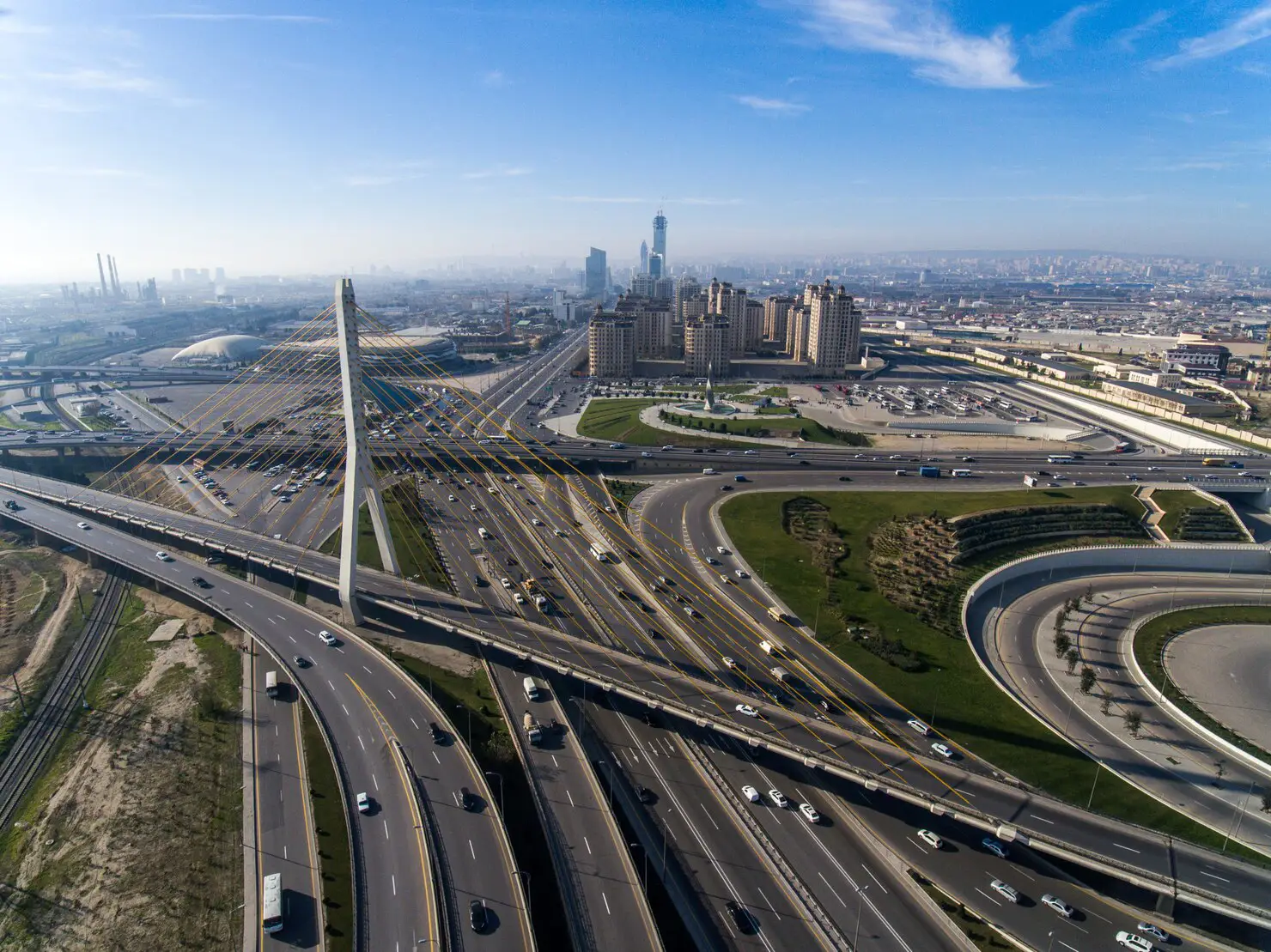
Infrastructure isn’t just a quality-of-life feature; it’s a direct investment driver. Properties in well-connected, well-served communities attract quality tenants, command stronger rents, and experience lower vacancy. Dubai invests heavily in getting this right, at a scale few cities match.
The Dubai Metro, expanding highways, Al Maktoum International Airport (set to become one of the world’s largest), Expo City, internationally ranked schools and hospitals, and integrated retail communities; these aren’t aspirational plans. Most are built, operational, or in advanced development stages.
If you’re weighing different communities from an investment perspective, our Dubai Residential Areas Guide 2026 gives an honest, updated assessment of the best neighbourhoods to live and invest in across the city.
10. A Truly Global City – Diverse Demand, Natural Stability
Dubai sits at the intersection of Europe, Asia, and Africa, within an 8-hour flight of roughly two-thirds of the world’s population. It is home to over 200 nationalities and serves as the regional headquarters for thousands of multinational companies.
This international character is a structural stabiliser for the property market. When demand softens from one nationality group or one economic sector, others absorb it. Dubai doesn’t depend on a single economy, a single source of tourists, or a single tenant demographic. That diversity is a genuine buffer against the market volatility that affects more mono-economically dependent cities.
If you’re deciding between commercial and residential property in Dubai, that’s a strategic question worth answering carefully. Our analysis of commercial vs residential property investment in Dubai breaks down yield profiles, legal differences, and which approach suits different investor types.
Final Thoughts
The honest question isn’t whether to invest in Dubai real estate; it’s whether you have a clear strategy when you do.
Zero tax on gains and rental income. Rental yields that outperform London, New York, and Singapore. Full foreign ownership rights. A Golden Visa pathway for qualifying investors. Off-plan entry points with developer-backed payment plans. A growing population and a government actively building one of the world’s most liveable cities. These fundamentals are compelling, and in 2026, they’re more robust than they’ve ever been.
What the market asks in return is informed decision-making: understanding which area matches your goals, knowing when to go off-plan versus ready, and having trustworthy guidance when DLD paperwork, contracts, and mortgage options come into play.
That’s where we come in. The team at Habico Properties works with buyers, investors, and business owners from across the globe – providing clear, honest guidance with no pressure and no fluff.
Browse our latest Dubai investment properties, or speak directly with one of our advisors today to take your first step.
Frequently Asked Questions
Why invest in Dubai real estate?
Dubai offers zero property tax, zero capital gains tax, gross rental yields of 6-9%, full foreign freehold ownership, a 10-year Golden Visa for qualifying investors, and a transparent regulatory system. Very few markets globally combine this level of return, legal protection, and lifestyle quality.
Is buying property in Dubai safe?
Yes – for both residents and overseas investors. The Dubai Land Department and RERA regulate all transactions, mandate escrow protection for off-plan projects, and provide formal dispute resolution channels. Your title deed is registered in your name and is fully enforceable under UAE law.
Can foreigners buy property in the UAE?
Yes. Foreign nationals can purchase freehold property in designated zones across Dubai without a UAE residency visa or a local partner. Ownership is outright; you hold the title deed directly, with the same rights as a UAE national in those zones.
What is the average rental yield in Dubai?
Average gross rental yields in Dubai range from 6% to 9% per year. Certain areas, particularly Jumeirah Village Circle and Dubai Silicon Oasis, can exceed 9% on specific property types. These figures consistently outperform the rental returns in most comparable global cities.
What is the minimum investment required in Dubai?
There’s no legal minimum. Practically speaking, apartments in more affordable communities start from around AED 400,000 (approximately USD 109,000). For Golden Visa eligibility, the threshold is AED 2 million.
Which areas give the best ROI in Dubai?
JVC, Dubai Silicon Oasis, Business Bay, and Al Furjan consistently rank highest for rental yield. For long-term capital appreciation, Dubai Creek Harbour, Dubai Hills Estate, and Mohammed Bin Rashid City show strong growth trajectories. Our highest ROI areas in Dubai 2026 guide covers every major community in detail.
Are there taxes on property in Dubai?
No annual property tax and no capital gains tax. The main transaction cost is a one-time 4% transfer fee payable to the Dubai Land Department on purchase, plus minor administrative fees. This makes Dubai one of the most tax-efficient property markets anywhere in the world.
How do I buy property in Dubai for investment?
The process involves selecting a property, signing an MOU (Memorandum of Understanding), paying a 10% deposit, completing KYC with the DLD, and completing the title transfer. For off-plan, you follow the developer’s payment plan schedule. Our team at Habico Properties handles every step of this process for buyers from any country. Get in touch with our advisors here to get started.